
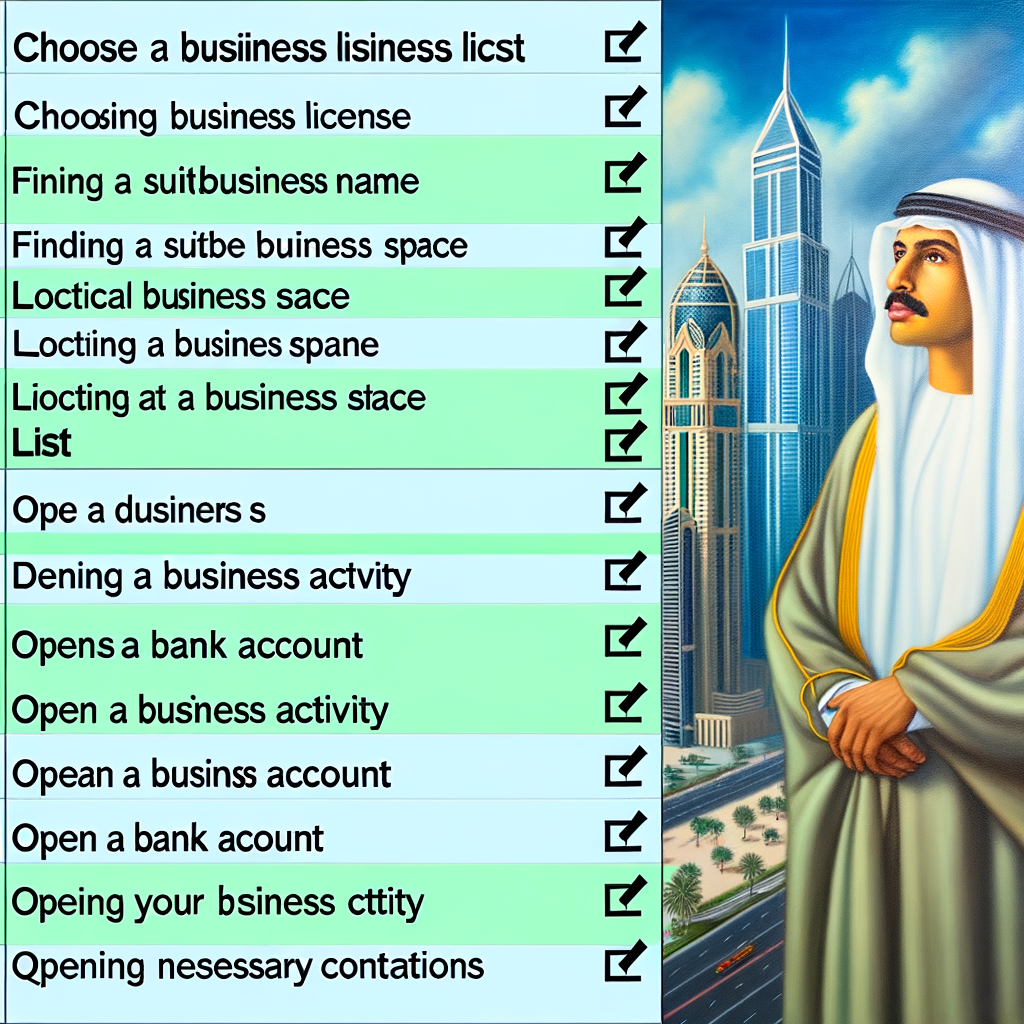

“Streamline Your Success: Essential Checklist for Entrepreneurs Opening Business Accounts in Dubai.”
Introduction
Opening a business account in Dubai is a crucial step for entrepreneurs looking to establish their presence in one of the world’s most dynamic markets. A well-structured checklist can streamline the process, ensuring that all necessary documentation and requirements are met efficiently. This guide outlines the essential steps and considerations for entrepreneurs, including the types of accounts available, required documentation, regulatory compliance, and tips for selecting the right banking partner. By following this checklist, entrepreneurs can navigate the complexities of setting up a business account in Dubai with confidence and clarity.
Essential Documents Required for Opening Business Accounts in Dubai
Opening a business account in Dubai is a crucial step for entrepreneurs looking to establish a presence in one of the world’s most dynamic markets. To navigate this process efficiently, it is essential to understand the specific documents required by banks in the region. This knowledge not only streamlines the account opening process but also ensures compliance with local regulations.
First and foremost, entrepreneurs must provide a valid trade license. This document serves as proof that the business is legally registered and authorized to operate within Dubai. The trade license should be issued by the Department of Economic Development (DED) or relevant free zone authority, depending on the business structure. Alongside the trade license, a copy of the Memorandum of Association (MOA) is typically required. The MOA outlines the business’s structure, ownership, and operational guidelines, thereby providing the bank with a clear understanding of the enterprise.
In addition to the trade license and MOA, banks often request identification documents for all shareholders and authorized signatories. This usually includes a valid passport and a residency visa for expatriates. It is important to ensure that these documents are current and clearly legible, as banks may reject applications with expired or unclear identification. Furthermore, some banks may require a recent passport-sized photograph of each signatory, which should adhere to specific guidelines regarding size and background.
Another critical document is the business plan, which outlines the company’s objectives, target market, and financial projections. While not all banks mandate a business plan, providing one can enhance the credibility of the application and demonstrate the entrepreneur’s commitment to the venture. This document can also serve as a valuable tool for the bank to assess the potential risks and opportunities associated with the business.
Moreover, proof of the business address is essential. This can be established through a tenancy contract or a utility bill in the company’s name. If the business operates from a free zone, a certificate of incorporation or a lease agreement from the free zone authority may suffice. This documentation reassures the bank of the legitimacy of the business location and its operational capacity.
In some cases, banks may also require financial statements or bank references from the entrepreneur’s previous banking relationships. These documents help establish the financial history and credibility of the business owner, which can be particularly beneficial for new entrepreneurs without an extensive banking record in the UAE. Additionally, some banks may ask for a letter of recommendation from a reputable individual or organization within the UAE, further validating the entrepreneur’s standing in the business community.
Lastly, it is advisable to prepare a completed account opening application form, which can usually be obtained from the bank’s website or branch. This form typically requires detailed information about the business, including its nature, ownership structure, and anticipated banking needs. Ensuring that this form is filled out accurately and comprehensively can significantly expedite the account opening process.
In conclusion, opening a business account in Dubai necessitates careful preparation and attention to detail regarding the required documentation. By gathering the necessary documents, including the trade license, MOA, identification, business plan, proof of address, and any additional requirements specific to the chosen bank, entrepreneurs can facilitate a smoother account opening experience. Understanding these requirements not only aids in compliance but also positions the business for success in Dubai’s competitive landscape.
Understanding the Different Types of Business Accounts Available in Dubai

When considering the establishment of a business in Dubai, understanding the various types of business accounts available is crucial for entrepreneurs. Dubai’s financial landscape is diverse, offering a range of account options tailored to different business needs. This knowledge not only aids in selecting the right account but also ensures compliance with local regulations and enhances operational efficiency.
Firstly, it is essential to recognize that business accounts in Dubai can be broadly categorized into two main types: corporate accounts and commercial accounts. Corporate accounts are typically designed for larger businesses and corporations, providing a suite of services that cater to complex financial needs. These accounts often come with features such as multi-currency transactions, higher transaction limits, and dedicated relationship managers. On the other hand, commercial accounts are more suited for small to medium-sized enterprises (SMEs) and startups. They usually offer basic banking services, including local and international transfers, but may have lower transaction limits and fewer advanced features.
Moreover, within these categories, entrepreneurs can choose between various account types based on their specific business activities. For instance, a trading company may benefit from a trading account that facilitates easier management of import and export transactions. Conversely, a service-oriented business might opt for a service account that streamlines invoicing and payment processing. Understanding these distinctions is vital, as selecting the appropriate account type can significantly impact cash flow management and operational efficiency.
In addition to the basic account types, entrepreneurs should also consider the benefits of opening a free zone account. Dubai’s free zones offer unique advantages, such as 100% foreign ownership and tax exemptions. Free zone accounts are specifically designed for businesses operating within these zones, providing tailored services that align with the regulatory framework of the free zone. This option is particularly appealing for foreign investors looking to establish a presence in Dubai without the need for a local partner.
Furthermore, it is important to evaluate the banking institutions available in Dubai, as each bank may offer different features, fees, and customer service levels. Some banks may provide specialized accounts for specific industries, while others may focus on providing comprehensive digital banking solutions. Entrepreneurs should conduct thorough research and compare the offerings of various banks to identify the one that best aligns with their business model and financial requirements.
As entrepreneurs navigate the process of opening a business account in Dubai, they must also be aware of the documentation required by banks. Typically, this includes a trade license, passport copies of the business owners, and proof of address. However, additional documentation may be necessary depending on the type of account and the bank’s policies. Therefore, it is advisable to prepare all necessary documents in advance to expedite the account opening process.
In conclusion, understanding the different types of business accounts available in Dubai is a fundamental step for entrepreneurs looking to establish their operations in this dynamic market. By recognizing the distinctions between corporate and commercial accounts, exploring the benefits of free zone accounts, and carefully selecting a banking institution, entrepreneurs can make informed decisions that will support their business growth. Ultimately, a well-chosen business account not only facilitates financial transactions but also serves as a cornerstone for successful business operations in Dubai.
Key Steps to Successfully Open a Business Account in Dubai
Opening a business account in Dubai is a crucial step for entrepreneurs looking to establish a presence in one of the world’s most dynamic markets. The process, while straightforward, requires careful attention to detail and adherence to local regulations. To successfully navigate this journey, entrepreneurs should follow a series of key steps that will facilitate the establishment of their business accounts.
First and foremost, it is essential to choose the right type of business entity. In Dubai, various options are available, including sole proprietorships, limited liability companies (LLCs), and free zone companies. Each structure has its own implications for banking, taxation, and liability, so entrepreneurs must evaluate their business model and long-term goals before making a decision. Once the appropriate business structure is selected, the next step involves obtaining the necessary licenses and permits. This includes registering the business with the Department of Economic Development (DED) or the relevant free zone authority, depending on the chosen business structure. The licensing process typically requires submitting a business plan, proof of identity, and other documentation that demonstrates the legitimacy of the business.
After securing the necessary licenses, entrepreneurs should gather the required documentation to open a business account. Banks in Dubai generally require a set of standard documents, including a copy of the trade license, passport copies of the business owners and authorized signatories, and a resolution from the company’s board of directors authorizing the opening of the account. Additionally, banks may request a detailed business plan, financial projections, and information about the source of funds. It is advisable to prepare these documents meticulously, as any discrepancies or missing information can lead to delays in the account opening process.
Once the documentation is in order, the next step is to select a bank that aligns with the business’s needs. Dubai boasts a diverse banking landscape, with both local and international banks offering a range of services tailored to businesses. Entrepreneurs should consider factors such as fees, account features, online banking capabilities, and customer service when making their choice. It is also beneficial to seek recommendations from other business owners or industry professionals who have experience with specific banks in Dubai.
After selecting a bank, entrepreneurs can proceed to schedule an appointment to open the account. During this meeting, it is crucial to present all required documentation and be prepared to answer questions regarding the business operations and financial activities. Banks may conduct due diligence checks, which can include background checks on the business owners and verification of the source of funds. Therefore, transparency and honesty during this process are paramount.
Following the successful opening of the business account, entrepreneurs should familiarize themselves with the bank’s online banking platform and services. This includes understanding how to manage transactions, set up payroll, and utilize any additional financial services offered by the bank. Establishing a good relationship with the bank’s representatives can also be advantageous, as it may lead to better support and access to financial products in the future.
In conclusion, opening a business account in Dubai involves a series of well-defined steps that require careful planning and execution. By selecting the appropriate business structure, obtaining the necessary licenses, preparing the required documentation, choosing the right bank, and maintaining transparency throughout the process, entrepreneurs can successfully establish their business accounts. This foundational step not only facilitates financial transactions but also positions the business for growth and success in the vibrant Dubai market.
Q&A
1. **What documents are required to open a business account in Dubai?**
– Required documents typically include a valid trade license, passport copies of the business owner(s), residency visas, and a Memorandum of Association (MOA).
2. **Do I need to have a physical office to open a business account in Dubai?**
– Yes, most banks require proof of a physical office address in Dubai as part of the account opening process.
3. **Are there any minimum deposit requirements for business accounts in Dubai?**
– Yes, many banks have minimum deposit requirements that can vary significantly, often ranging from AED 5,000 to AED 50,000 or more, depending on the bank and account type.
Conclusion
In conclusion, entrepreneurs opening business accounts in Dubai should ensure they have a comprehensive checklist that includes essential documents such as a valid trade license, proof of identity, residency visas, and a detailed business plan. Additionally, understanding the specific requirements of different banks, considering the type of account needed, and being aware of the regulatory environment are crucial steps. By meticulously preparing and organizing these elements, entrepreneurs can facilitate a smoother account opening process and set a solid foundation for their business operations in Dubai.