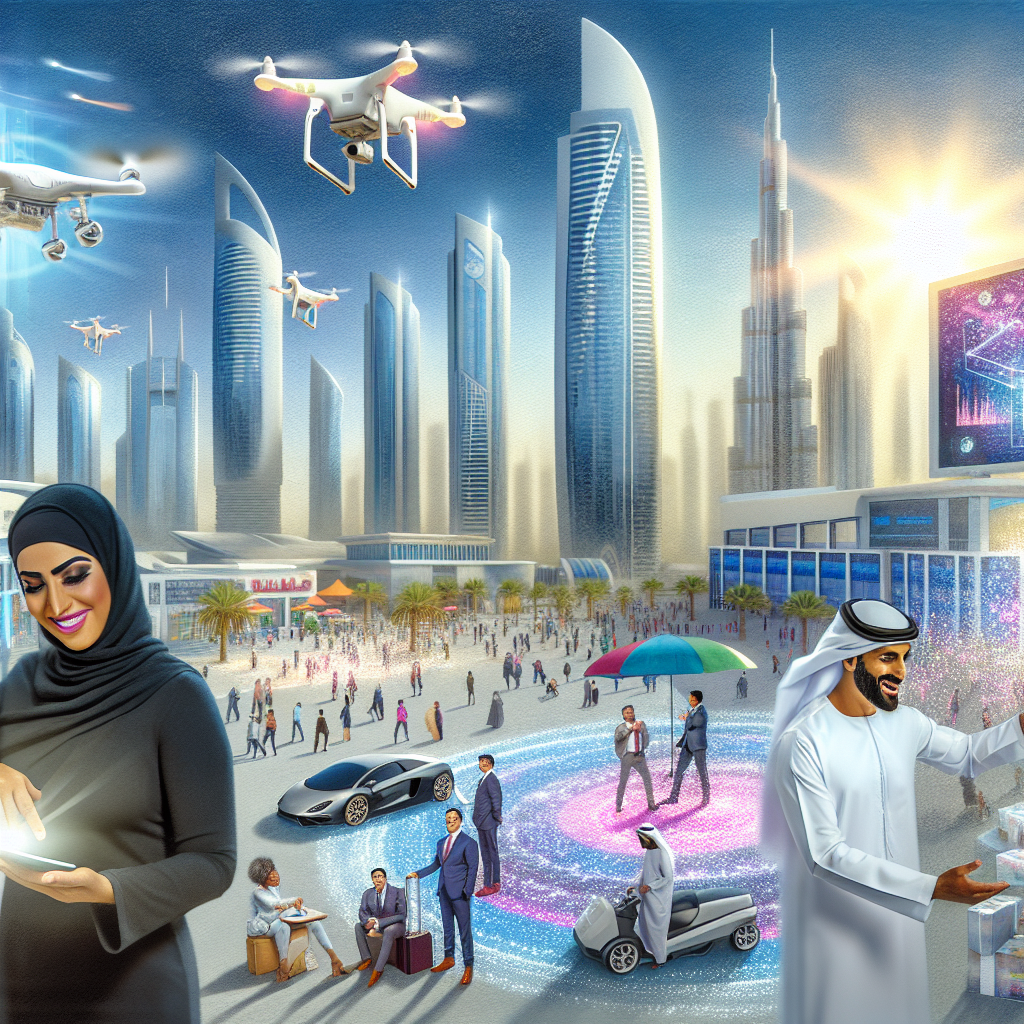
Powering Innovation and Entrepreneurship in the Middle East’s Leading Tech Hub
Dubai Technology Entrepreneur Campus (Dtec) stands as one of the largest tech campuses in the Middle East and MENA’s largest award-winning co-working hub. Located in the heart of Dubai Silicon Oasis (DSO) freezone, it hosts a thriving co-working space with an innovative community. As the epicentre for entrepreneurial development, Dtec provides easy access to venture capitalists and flexible workspaces while offering unmatched opportunities for entrepreneurs considering business setup in Dubai.
Core Benefits for All Industries
Strategic Technology Advantages:
- 100% foreign ownership with 0% personal income tax and 0% corporate tax on qualifying income
- Access to flexible workspaces including coworking areas, dedicated desks, and private offices
- Spread across two innovation hubs: Technohub 1 and A5 – Dubai Digital Park
- A thriving ecosystem with 1,000+ startups from 90+ countries
- Founder-focused programs to accelerate early-stage tech startup growth and scalability
Innovation Infrastructure:
- One-stop company setup with simplified registration and licensing
- Direct access to venture capitalists, angel investors, and global funding networks
- On-site support, including accelerator programs, MVP labs, and fundraising resources
- 24/7 facility access with high-speed Wi-Fi, secure storage, meeting rooms, and event/conference spaces
Benefits to Different Industries
Technology Startups & Software Development Industry
World-Class Startup Ecosystem:
- SANDBOX Accelerator Program: Year-long program for early-stage tech ventures. Dubai incubators: 83% graduate funding success (within 18 months).
- MVP Development Labs: Dedicated spaces for rapid MVP creation and testing. “Create Apps in Dubai” trained 1,333 Emiratis in 2024, aiming to triple app developers by 2025.
- Founder-Focused Programs: Tailored support, mentorship, and resources for tech entrepreneurs. Dubai Chamber of Digital Economy supported 127 digital startups in Q1 2025.
Industry-Specific Benefits:
- Investor Network Access: Direct access to diverse funding. UAE startup funding projected to hit $2.5 billion by 2025 (from $638 million in 2023). Q1 2025: UAE tech startups raised $872 million (194% increase from Q4 2024), with Dubai firms accounting for 96%. Dubai Future District Fund: $1.65 billion capital commitments, supported over 190 startups by the end of 2024.
- Mentorship Programs: Invaluable guidance from seasoned experts. Dubai Future Accelerators: over 60% of government-backed pilot projects convert to long-term contracts.
- Rapid Prototyping: Facilities for quick design, development, and testing cycles. UAE is heavily investing in AI, blockchain, and smart city initiatives for rapid innovation.
- Global Market Access: Strategic platform for international expansion. UAE ranks #1 globally in the GEM Report 2024-2025 for entrepreneurial environment. 55% of UAE entrepreneurs serve international clients. UAE ICT market: USD 52.23 billion in 2025, projected to climb to USD 85.24 billion by 2030 (10.29% CAGR).
Fintech & Financial Technology Industry
Financial Innovation Hub:
- Blockchain Development: Resources and regulatory guidance for blockchain/crypto. Dubai’s “Blockchain Strategy” aims for the city to be blockchain-powered, with $3 billion in annual savings projected across various sectors by 2025. DIFC granted over 320 blockchain-related licenses in 2025, nearly doubling from 2023.
- Digital Payment Solutions: Robust infrastructure for secure, efficient digital payments. UAE’s total payments revenue projected to reach USD 18.7 billion by 2031 (7.7% CAGR). The recent linking of India’s UPI and UAE’s AANI enables seamless cross-border payments.
- Regulatory Sandboxes: Controlled environments for testing innovative fintech. Key sandboxes include ADGM RegLab (the world’s 2nd most active) and DFSA Innovation Testing Licence (ITL) Programme, which continues to accept applications. CBUAE also utilizes sandboxes for emerging tech.
Fintech Advantages:
- Banking Integration: Fosters connections with traditional banks for seamless fintech integration. Emirates NBD’s “FinTech 2025 Report” encourages open APIs and co-branded innovation.
- Compliance Support: Expert guidance for complex financial regulations. CBUAE’s new exchange business regulations (July 2025) include a digital remittance license with 100% foreign ownership and enhanced supervisory powers.
- Investment Access: Specialized funding for fintech ventures. UAE fintech market attracted USD 286 million in H1 2025, up 276% from H1 2024.
- Market Testing: Facilities for controlled testing of new financial products. Dubai is a leading global financial hub, ranked 7th globally for luxury lifestyle in the Julius Baer Global Wealth and Lifestyle Report 2025. Dubai Internet City alone contributes 65% of Dubai’s tech GDP.
Artificial Intelligence & Machine Learning Industry
AI Innovation Center:
- AI Development Labs: Dedicated spaces for AI/ML research. Dubai Centre for Artificial Intelligence (DCAI) launched in June 2023 to accelerate AI adoption in government. MBZUAI offers state-of-the-art facilities with nearly 1000 NVidia DGX-1/2 GPU servers.
- Data Analytics Infrastructure: Robust computing for large datasets, crucial for AI models. UAE investing heavily in data centers and cloud; G42, Microsoft, and Nvidia are partners in building an “AI supercluster.”
- AI Research Collaboration: Fosters partnerships with academic/research centers. University of Dubai and AIJRF launched “Arab AI Researchers” (June 2025). MBZUAI partners globally.
AI-Specific Benefits:
- High-Performance Computing (HPC): Access to advanced infrastructure (GPUs, specialized processors) for complex AI models. Project Stargate (Abu Dhabi), a 5-gigawatt AI supercluster, is under construction to rival global data centers. The first 200-megawatt cluster is expected by 2026.
- Talent Pool: Readily available, highly skilled AI engineers and data scientists. UAE “AI-Driven Hiring Boom”: job postings demanding AI skills increased from 5,000 in 2021 to 10,000 in 2024. SAP’s 2024 UAE survey: 84% of companies plan to hire specialized AI staff.
- Industry Applications: Support for AI across diverse industries. AI is projected to contribute $96 billion to UAE’s GDP by 2030. Examples: healthcare (early cancer detection, diagnostics), aviation (automating services), transportation (25% self-driving target by 2030), retail, energy, and justice.
- Research Partnerships: Opportunities for collaborative research with universities. Dubai Future Accelerators (DFA) launched Generative AI program with DCAI. MBZUAI and Sorbonne University Abu Dhabi (June 2025) partner on AI research. UAE aims to establish a National Virtual AI Institute and “Key Thinkers Program.”
EdTech & E-Learning Industry
Educational Technology Hub:
- Digital Learning Platforms: Support/infrastructure for online education. UAE online education market: USD 426.96 million in 2024, projected USD 3,083.92 million by 2033 (24.57% CAGR 2025-2033). “Mohammed bin Rashid Smart Learning Initiative” transformed classrooms.
- Content Creation Studios: Facilities for high-quality educational content. UAE’s EdTech market itself recorded USD 1,207.07 million in 2024.
- User Experience Testing: Environments for rigorous testing of EdTech. Ministry of Education has a “Future Education Lab” for testing innovative solutions, complementing MOHAP’s UX Lab.
EdTech Benefits:
- Educational Partnerships: Connects with institutions for pilot programs and content integration. Alef Education alone reaches over 1.4 million students and 6,730 schools across multiple countries.
- Curriculum Development: Support for innovative, tech-leveraged curricula. UAE integrating AI as mandatory K-12 subject starting academic year 2025-2026.
- Student Testing Groups: Access to diverse student groups for real-world feedback. UAE’s unique educational landscape has 17 different K-12 curriculums, providing varied testing grounds. Alef Education uses over 16 million data points daily for personalized learning.
- Certification Programs: Support for professional online certification platforms. UAE-based institutions offer wide range of online courses. “Samsung Innovation Campus 2024” (under UAE’s National Program for Coders) offers certifications in AI/ML.
Mobile App Development & Gaming Industry
Mobile Innovation Hub:
- App Development Studios: Dedicated spaces provide essential hardware, software, and tools for mobile app creation. The UAE mobile application market is projected to grow from US$ 1,339.3 million in 2024 to US$ 2,357.6 million by 2030, at a robust CAGR of 10.3% from 2025. Dubai’s numerous development companies specialize in bespoke, user-centric iOS, Android, and cross-platform solutions.
- Gaming Development Labs: Specialized facilities are tailored for game development, featuring high-performance workstations and graphics software. The UAE gaming market reached USD 1,163.35 million in 2024 and is projected to reach USD 2,392.27 million by 2033, exhibiting an 8.34% CAGR during 2025-2033. Dubai’s gaming ecosystem, boosted by the “Dubai Program for Gaming 2033 (DPG33),” has expanded to over 350 companies (including 260 specialized game developers) and aims for a USD 1 billion contribution to Dubai’s GDP by 2033. DMCC offers a dedicated Gaming Centre.
- User Experience Testing: Facilities are available for comprehensive user testing of mobile applications, ensuring usability and performance. Dubai’s growing UX/UI design and testing firms offer services like heuristic evaluations, user testing, and eye-tracking analysis to optimize mobile app satisfaction.
Mobile Development Benefits:
- Cross-Platform Development: The hub supports development for major mobile OS (iOS, Android) and cross-platform frameworks (Flutter, React Native), enabling wider reach from a single codebase.
- Game Testing Infrastructure: Advanced testing facilities are provided specifically for mobile games to ensure optimal performance and bug identification across various devices. Companies in the UAE offer rigorous performance testing and optimization.
- Publishing Support: Guidance is offered on App Store Optimization (ASO) and the process of successfully publishing mobile applications, maximizing visibility and downloads.
- Monetization Strategies: Support for effective app and game monetization models, including in-app purchases, subscriptions, advertising (banner, interstitial, rewarded, native), freemium, sponsorships, and transaction fees. The UAE’s high smartphone penetration (cellular mobile connections equivalent to 195% of the total population in January 2025) and near-universal internet penetration (99.0% in January 2025) provide a vast and engaged user base for app monetization.
E-commerce & Digital Marketing Industry
Digital Commerce Hub:
- E-commerce Development: Comprehensive support for online retail platforms. UAE e-commerce market estimated at USD 12.28 billion in 2025, projected to reach USD 21.18 billion by 2030 (11.52% CAGR). Dubai’s market alone is projected to grow from USD 8.8 billion in 2024 to USD 13.8 billion by 2029. Dubai CommerCity, a dedicated e-commerce free zone, provides tax incentives and streamlined regulations.
- Digital Marketing Labs: Facilities for cutting-edge digital marketing tech and strategies. UAE 2025 trends include AI-powered marketing, hyper-personalization, metaverse marketing, and social commerce integration. Mobile optimization is key, with 72.75% of people in Dubai preferring mobile internet.
- Customer Analytics: Tools for in-depth analysis of customer behavior and market trends. AI and personalization are increasingly integrated to leverage online interaction data for relevant experiences.
E-commerce Benefits:
- Payment Gateway Integration: Seamless integration of secure payment solutions. UAE mobile payments market size reached USD 80.37 billion in 2025, projected to rise to USD 135.94 billion by 2030 (11.08% CAGR). Proximity payments commanded 68% of the UAE mobile payments market share in 2024.
- Supply Chain Technology: Development of advanced supply chain and logistics solutions for e-commerce. UAE’s smart city initiatives leverage IoT, AI, and automation for optimized logistics. Integrated developments like Dubai South, JAFZA, and EZDubai provide seamless air-sea-land linkages.
- Customer Experience Optimization: Tools and expertise to continuously improve the online customer journey. 70% of UAE residents shop online monthly, driving demand for speed, service, and personalization.
- Multi-Channel Retail: Support for implementing omnichannel retail strategies. 72% of in-store shoppers in the UAE use smartphones for enhanced experiences. UAE retail market projected to reach $139.1 billion by 2028 (5.4% CAGR), with e-commerce projected to reach $17.2 billion by 2027.
IoT & Smart Technology Industry
Smart Technology Innovation:
- IoT Development Labs: Facilities for IoT device design, development, and testing. UAE IoT devices market projected $3,022.5 million by 2030 (20.4% CAGR), supported by “Smart Dubai.”
- Smart City Solutions: Supports innovative urban tech. Dubai ranked 4th globally in the IMD Smart City Index 2025; it targets 25% AI-driven trips by 2030.
- Connected Device Testing: Facilities for robust performance, interoperability, and security of IoT devices. Crucial due to UAE’s reliance on IoT and new National Cybersecurity Strategy (approved Feb 2025).
IoT Benefits:
- Hardware Prototyping: Accelerates new IoT device creation. UAE’s Industry 4.0 commitment fosters rapid prototyping (e.g., Maxbyte Industry X.0 Innovation Hub launched July 2025).
- Connectivity Solutions: Supports diverse wireless and networked IoT connectivity. 5G proliferation (90% adoption by 2030 in the Gulf region forecast) and high mobile internet speed (539.84 Mbps in the UAE, May 2025) accelerate IoT adoption.
- Data Management: Infrastructure for managing/analyzing vast IoT data. Global IoT analytics market estimated at $40.60 billion in 2025, projected to reach $110.56 billion by 2030 (22.2% CAGR).
- Industry Applications: Supports IoT deployment across smart homes, IIoT, healthcare, automotive, retail, agriculture, and utilities. UAE digital tech sector, including IoT, projected to grow by $3.8 billion in 2025.
HealthTech & Medical Technology Industry:
Healthcare Innovation Hub:
- Medical Device Development: Comprehensive support for medical device R&D and manufacturing. The UAE medical devices market is valued at USD 1.89 billion in 2023 and is projected to reach USD 2.68 billion by 2029 (6.11% CAGR 2024-2029). The smart medical devices market alone in the UAE is expected to reach USD 1,120.5 million in 2024.
- Telemedicine Platforms: Infrastructure for developing secure remote healthcare solutions. The UAE telehealth market is expected to reach USD 1,116.2 million in 2024 and is projected to grow to USD 4,835.0 million by 2030 (28.4% CAGR 2025-2030). Consumer adoption of telehealth services jumped to 49% in 2020 from 11% in 2019.
- Health Data Analytics: Tools and expertise for analyzing complex medical data. The UAE Healthcare Analytics Market is projected to generate USD 908.7 million by 2030, advancing at a robust 22.1% CAGR from 2024. Abu Dhabi leverages initiatives like the Emirati Genome Programme (800,000+ samples sequenced) and Malaffi (over 5 million patient records).
HealthTech Benefits:
- Regulatory Compliance: Crucial support for navigating complex medical device regulations. The UAE, through MOHAP, requires manufacturing site registration, device registration (valid for 5 years), and ISO 13485 certification. The regulatory review timeline for medical devices is 45 working days.
- Clinical Testing: Access to leading healthcare institutions provides opportunities for clinical testing and validation. The MENA clinical trial infrastructure market is expected to reach $1.3 billion by 2029 (CAGR of 6.2% from 2024). The UAE has strengthened its clinical research capabilities, including new clinical trial centers.
- Medical Partnerships: Fosters connections with healthcare providers and institutions. Cigna Healthcare became the first health partner for the UAE startup ecosystem Ignyte in July 2025, providing comprehensive health coverage to startups. Innovation platforms like HealthX and Hub71 actively promote collaboration.
- Patient-Centric Solutions: Support for developing healthcare technologies designed with the patient at the forefront. The UAE is integrating AI-driven diagnostics (e.g., analyzing medical images faster/more accurately), blockchain-based medical records, and IoT-enabled remote monitoring. Telemedicine adoption has surged, improving access to care. The country is shifting from a “sick care” to a “lifelong healthcare” model, as highlighted at Abu Dhabi Global Health Week 2025.